What will be the sources of more energy needs in the next, say, 10-20 years? Depending on which newspaper you read it seems it’s either EVs, or data centers, or industrial electrification, or A/C and cooking heat in the global south.. which is it?
Global energy use will increase, if the IEA are to be believed. EVs reducing the need for primary energy and stricter building codes are no match for population growth and the global south finally getting good access to clean cooking and air conditioning.
For electricity the growth is faster than energy overall, since while the overall energy use grows we also shift fossil energy for electricity.
Electricity growth by sector
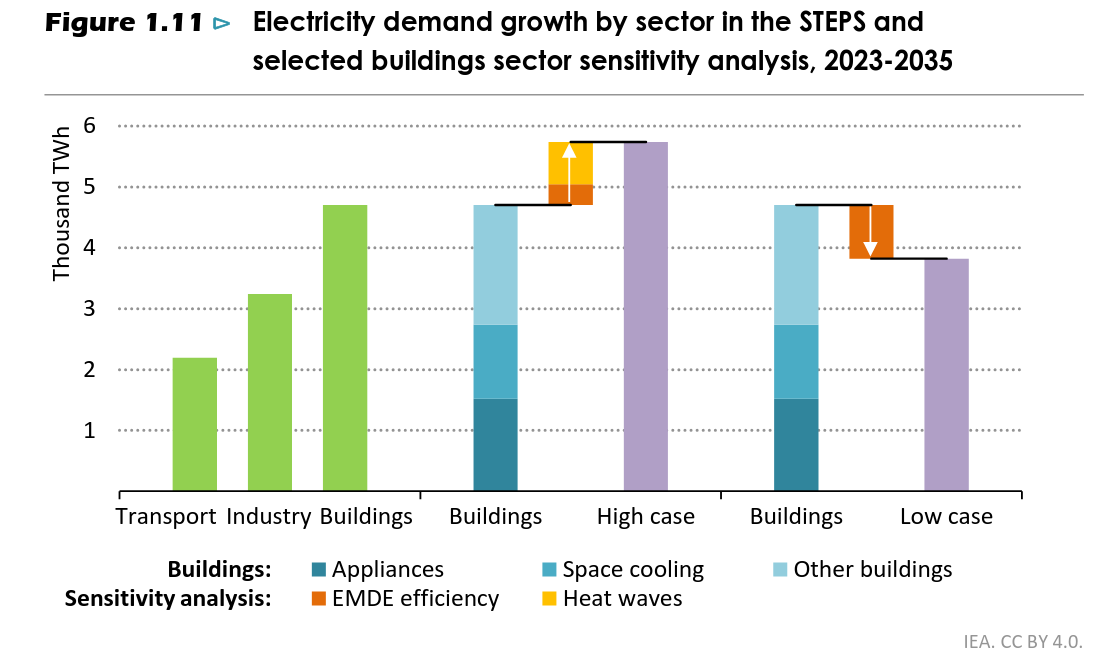
You can think of electricity growth basically split into three buckets: Industry, Buildings, Transport. You’d expect the majority of the growth to be from all these darned EVs, but actually buildings dominate the trio. Electricity needs for buildings accounts for twice as much growth as transport does, with industry landing in between the two.
As you can see in the IEA figure above, the building portion is split further into thirds: Cooling, Appliances (eg stoves), Everything Else.
It seems that, as ever, the answer is there are several major parts contributing and not a single smoking gun. Notably absent though is this AI data center book I’ve heard so much about - even though this is an updated IEA report specifically meant to take that into account.
So: Buildings, Industry, Transport, in that order. And within buildings: cooling, stoves, everything else.
Electricity growth by region
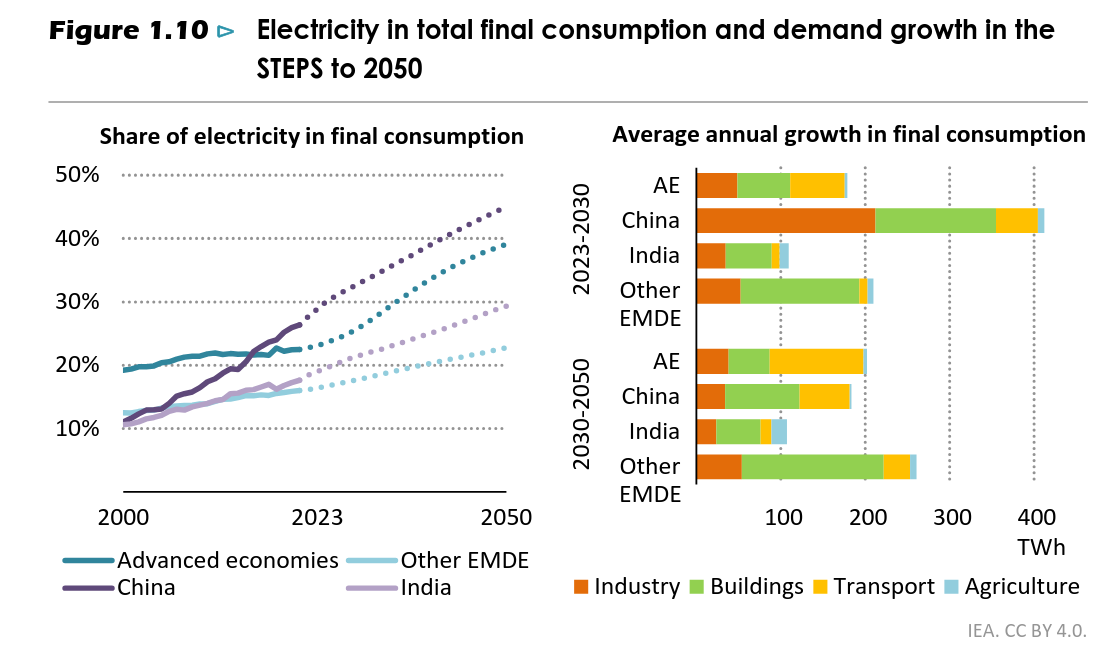
Where is the growth happening? Is it all the Norwegians with their EVs? Well, kinda.. but no.
The mental model we should have seems to be: Half the growth is China. 25% is India and the “Advanced Economies”, and 25% is Emerging and Developing Economies.
There are differences in the makeup of the growth by region, kinda. Essentially transport only makes a notable dent in China and the Advanced Economies. In the Emerging and Developing Economies it’s nearly all buildings 75% of the growth.